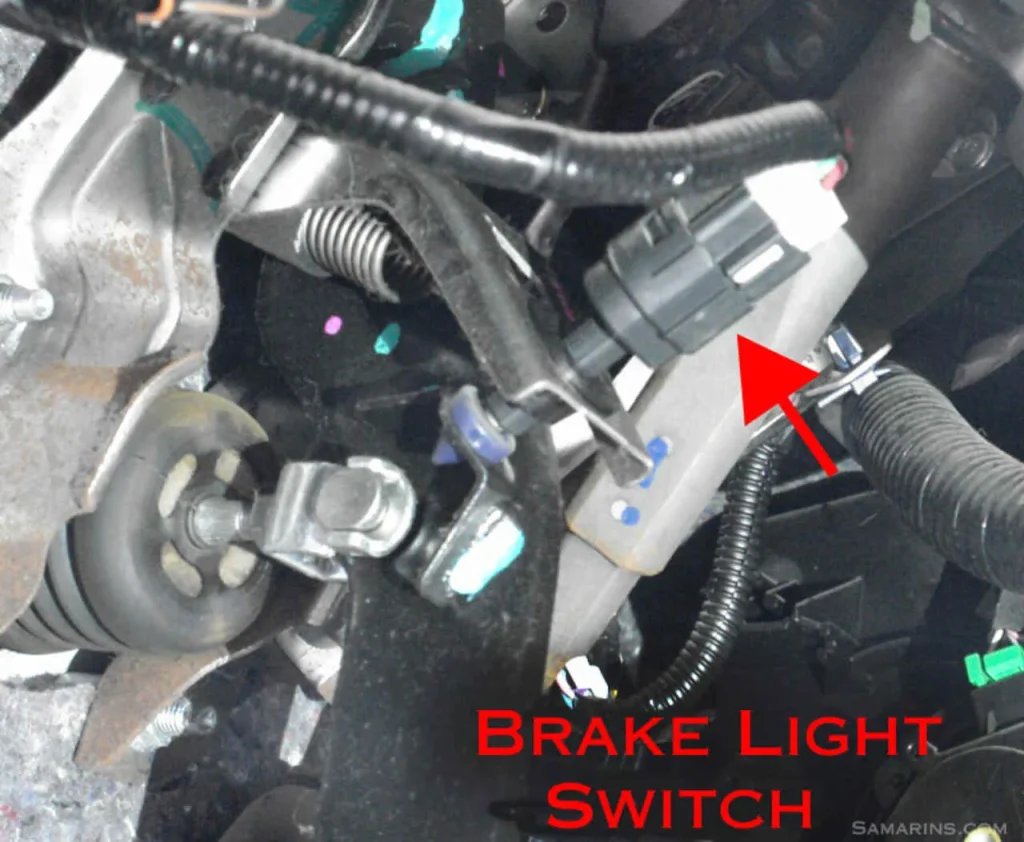
When brake lights stop working, most people blame the bulb, and a lot of the time they’re right. But if new bulbs and a good fuse change nothing, or the car refuses to start or won’t leave park, the real culprit is often a small plastic switch tucked above the brake pedal. Knowing the brake light switch symptoms saves you from replacing parts that were never broken, and the switch itself is one of the cheaper repairs you’ll face.
What the switch does besides lighting up the rear
Every time you press the pedal, the switch closes a circuit and the brake lights come on. That’s the part everyone knows. What’s less obvious is that the car’s computer watches the same signal. It uses it to cancel cruise control, to let the gear selector out of park, to allow a push-button start and to help ABS and stability control do their jobs. One cheap switch, five or six systems depending on it. When it misbehaves, the symptoms can look wildly unrelated to your brakes.
Where it sits
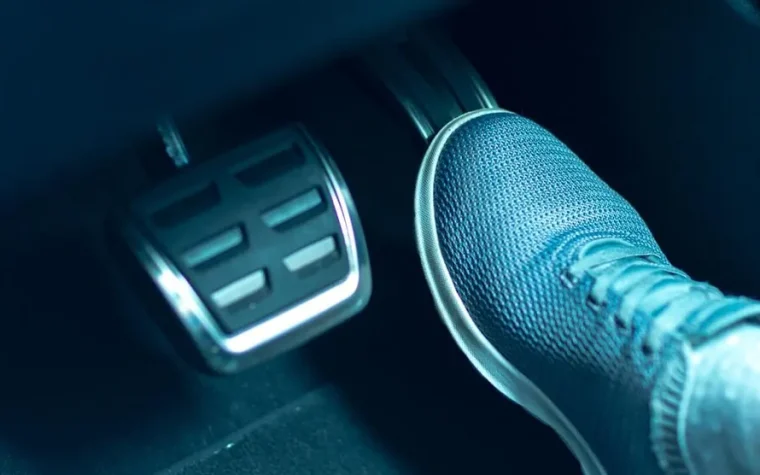
On most cars you’ll find it under the dashboard, on the bracket just above the brake pedal arm. It’s a small plunger switch with a plug on the end, and the pedal rests against it when your foot is off the brake. You usually have to lie in the footwell and look up to see it, so a torch helps. Locations vary, so your owner’s manual is the best guide. A few older vehicles, some Land Rover models for example, use a hydraulic switch on the brake line instead.
How a failing switch shows itself
The lights never come on
You press the pedal and the rear of the car stays dark. Check the bulbs and fuse first, since they fail far more often. If they’re fine, the switch isn’t sending its signal.
The lights never go off
Brake lights that stay on after you let go, or even with the car switched off, mean the switch is stuck or out of position. It can also run your battery flat overnight.
The engine won’t start
Push-button cars want to see the brake pressed before they’ll crank. If the switch doesn’t report it, you press the pedal and get nothing.
The shifter won’t leave park
Same idea. The shift lock only releases when the switch says the brake is down. Foot on the pedal and the lever still stuck? Suspect the switch.
Cruise control quits
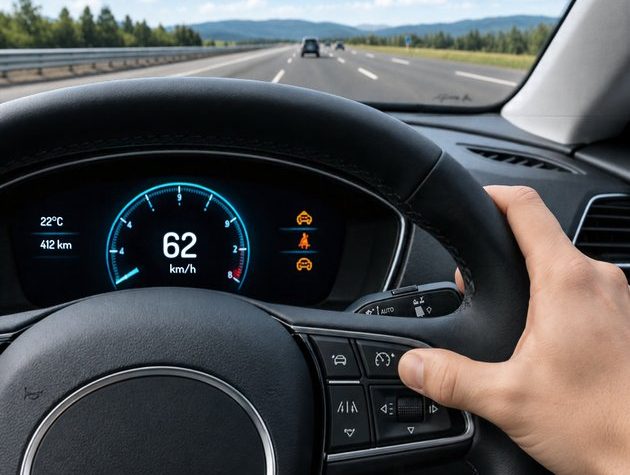
Cruise uses the switch as a safety cancel, so a faulty one can stop it engaging or kill it at random. If that’s your symptom, our guides on cruise control not working and adaptive cruise control show what else to check.
Warning lights appear
If the signal looks wrong, the computer can log a fault and light up the ABS, traction or stability warnings. Other parts cause the same lights, like the wheel speed sensor or, on Subarus, the Vehicle Dynamic Control system, so a scan helps.
Why switches fail
Mostly wear. The switch works every time you brake, so its internal contacts eventually give up. It can also work loose and sit out of position, so the pedal no longer presses it properly and the car thinks you’re braking constantly. Corroded connectors, damaged wiring and moisture do the rest. A blown fuse can mimic all of it, which is why it’s worth ruling out first.
Testing it at home
Start with the cheap checks. Have a helper watch the rear lights while you press the pedal, or reverse toward a wall at night and watch the reflection. Then find the brake light fuse in your manual. Next, look at the switch itself: is it seated, does the plunger move freely, is the plug clean and tight? If you own a multimeter, your repair manual lists the voltage and continuity readings to expect. And if everything checks out but the problem remains, a scan tool will show which circuit is complaining.
Can you keep driving with it?
Not for long. With dead brake lights, the driver behind can’t tell you’re slowing, which is how rear-end crashes happen. Lights stuck on confuse people and drain your battery. In many places you can be fined or fail an inspection too. If the pedal also feels soft or sinks, don’t drive at all and read about a brake pedal that goes to the floor.
Replacing it
On many cars it’s a ten-minute job. Unplug the connector, release the old switch (it usually twists or unclips), fit the new one so the pedal touches the plunger as the manual describes, reconnect and test the lights, the start button and cruise. Position matters. A switch fitted slightly wrong can keep the lights on or upset other systems, so if you’re not confident, let a shop do it.
What you’ll pay
The part is usually $15 to $50. At a shop, expect roughly $100 to $200 with labor, and more on some luxury and European models.
Time to book it in
Get it inspected if new bulbs and fuses don’t bring the lights back, if the lights stay on or the battery keeps dying, if the car won’t start or leave park, or if ABS, traction or stability lights stay lit. Related faults can look similar, such as a hesitating throttle (accelerator pedal position sensor) or a stuck emergency brake. A flashing check engine light is its own warning, and regular checks like those in our automotive maintenance tips catch small faults early.
FAQs
What are the symptoms of a bad brake light switch?
Brake lights that won’t come on or won’t go off, a car that won’t start or leave park, cruise control that quits and ABS or stability lights.
Can a bad switch drain the battery?
Yes. If it keeps the brake lights on after you switch off, they can flatten the battery overnight.
Where is the brake light switch?
Usually under the dashboard, on the bracket above the brake pedal arm.
Can it stop the car starting?
It can, especially on push-button start cars that need the brake pressed.
How much does it cost to replace?
The part is about $15 to $50 and a shop typically charges around $100 to $200 in total.
Is it safe to drive with a bad one?
No. Without working brake lights, other drivers can’t see you slow down.
Before you buy the part
If you’re about to order a switch, take a photo of the old one first and match the plug and shape exactly. Many look alike and aren’t. Then test every function afterwards: lights, start button, shifter and cruise. It takes two minutes and tells you the job’s finished.